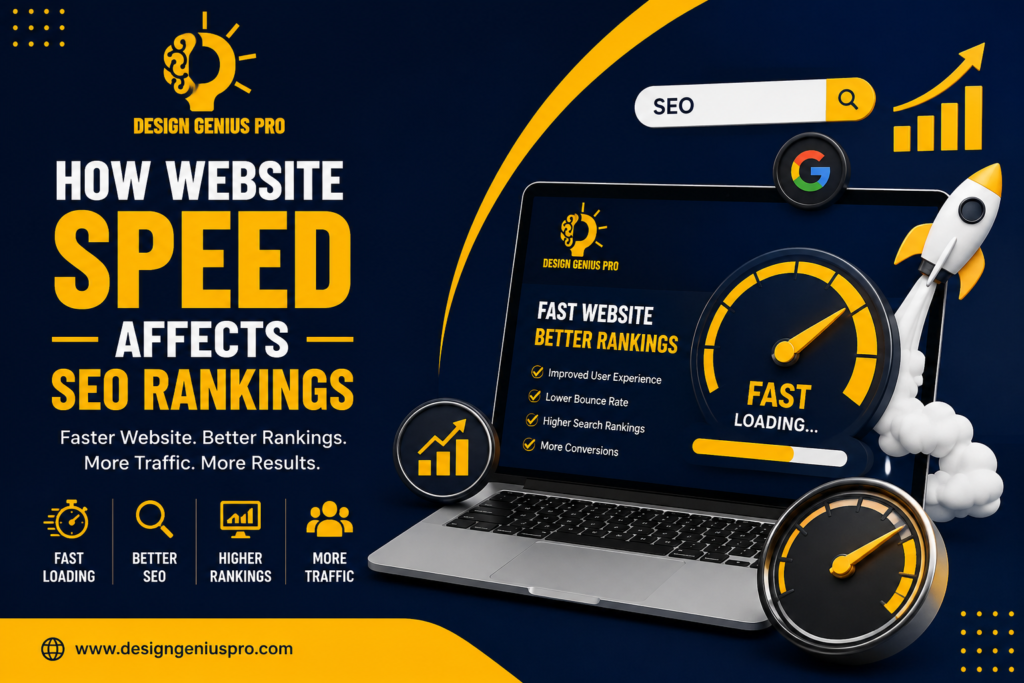
How Website Speed Affects SEO Rankings
Have you ever left a website because it took too long to load? You’re not alone. Studies show that users expect a website to load in just a few seconds. If it doesn’t, they often leave and visit a competitor instead.
Website speed is no longer just a user experience factor—it’s one of Google’s ranking signals. A fast website helps improve your search engine rankings, keeps visitors engaged, and increases conversions. Whether you own a WordPress website, a Shopify store, or a custom business website, optimizing speed should be a top priority.
In this guide, we’ll explain why website speed matters for SEO and how you can improve your website’s performance.
Why Website Speed Matters
Website speed refers to how quickly your web pages load when someone visits your site. Faster websites create a better user experience, while slow websites can frustrate visitors and lead to higher bounce rates.
Google wants to provide users with the best possible experience, which is why page speed plays an important role in search rankings. A website that loads quickly is more likely to rank higher than one that takes too long.
Benefits of a Fast Website
- Higher Google rankings
- Better user experience
- Lower bounce rates
- More page views
- Increased conversions
- Improved customer satisfaction
- Better mobile performance
Website Speed and Google's Core Web Vitals
Google introduced Core Web Vitals to measure real-world user experience. These metrics help determine how fast and responsive your website feels.
The three main Core Web Vitals are:
- Largest Contentful Paint (LCP): Measures how quickly the main content loads.
- Interaction to Next Paint (INP): Measures how responsive your website is when users interact with it.
- Cumulative Layout Shift (CLS): Measures visual stability and prevents unexpected layout changes.
Improving these metrics can positively impact both SEO and user satisfaction.
How Slow Websites Hurt SEO
A slow-loading website can affect your business in several ways:
Higher Bounce Rates
Visitors are less likely to stay on a website that loads slowly. When users leave quickly, Google may interpret this as a poor user experience.
Lower Search Rankings
Website speed is one of Google’s ranking factors. While great content remains essential, a slow website can make it harder to compete for top positions.
Fewer Conversions
Every extra second of loading time can reduce form submissions, online purchases, and customer enquiries.
Poor Mobile Experience
Most users browse on smartphones, making mobile performance more important than ever. A slow mobile website can cost you valuable customers.
Tips to Improve Website Speed
Improving website performance doesn’t always require a complete redesign. Here are some effective strategies:
Optimize Images
Large image files are one of the biggest causes of slow websites. Compress images and use modern formats like WebP without sacrificing quality.
Choose Fast Hosting
Reliable, high-performance hosting provides faster loading times and better uptime.
Minify CSS and JavaScript
Removing unnecessary code reduces file sizes and helps pages load more quickly.
Enable Browser Caching
Caching stores website files on a visitor’s device, reducing loading times for returning users.
Use a Content Delivery Network (CDN)
A CDN stores your website on multiple servers worldwide, delivering content from the location closest to the visitor.
Reduce Unnecessary Plugins
Too many plugins—especially on WordPress—can slow down your website. Keep only the plugins you need and update them regularly.
Why Choose Design Genius Pro?
At Design Genius Pro, we build websites that are not only visually appealing but also optimized for speed, SEO, and user experience. Whether you need a WordPress website, Shopify store, or a complete website redesign, we focus on creating high-performance websites that help businesses grow.
Our Services
Conclusion
Website speed is one of the most important factors affecting SEO, user experience, and conversions. A fast-loading website not only helps improve your Google rankings but also keeps visitors engaged and encourages them to take action.
By optimizing images, improving hosting, reducing unnecessary code, and following Google’s Core Web Vitals, your website can deliver a better experience for users and perform more effectively in search results.
If you’re ready to improve your website’s speed and online performance, Design Genius Pro can help you build a fast, responsive, and SEO-optimized website that drives real business results.
Share this post
-
Austin Texas, Core Web Vitals, Design Genius Pro, Google Rankings, Responsive Website Design, SEO, Shopify, Small Business Website, Technical SEO, Website Design, Website Development, Website Optimization, Website Performance, Website Speed, WordPress